

 +8618733132385
 +8618733132385



Processes for the Disposal and Resource Recovery of Barite Tailings
2026-07-12 Xinhai (14)

2026-07-12 Xinhai (14)
If you have any questions, please contact us through the following ways, we will give you more and better assistance!

Barite ore processing continuously generates solid tailings waste and processing effluent. Tailings treatment involves the establishment of a comprehensive process system centred on four key areas: effluent recycling, solid waste storage, ecological restoration and resource recovery, whilst balancing production stability with green production requirements.
The treatment of mineral processing effluent is the primary stage in tailings management. As the effluent contains suspended solids and small amounts of residual flotation reagents, a combined physical, chemical and biological treatment process is employed. First, suspended solid particles are removed through sedimentation in settling tanks and thickeners; reagents are then added to neutralise and degrade any residual flotation chemicals in the water, supplemented by biological treatment to further purify the water. The treated water is entirely recycled back to the crushing and sorting processes for reuse, significantly reducing the consumption of fresh water and lowering the risk of water pollution, whilst the sludge is centrally collected and stored in the tailings storage facility for stable disposal.
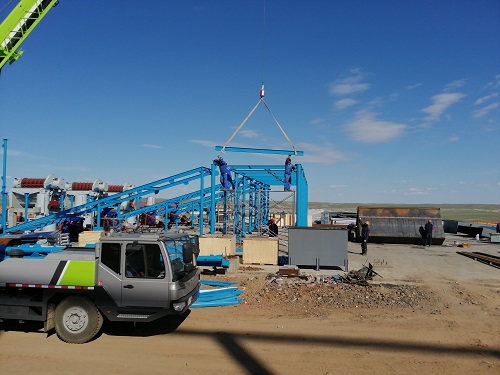
Solid tailings waste is subject to standardised stockpiling and management. The stockpile is equipped with impermeable liners and drainage facilities to prevent leachate from seeping out and contaminating soil and groundwater. During the initial stages of stockpiling, the tailings undergo solidification and stabilisation treatment to reduce the risk of harmful substances leaching out; a windbreak and dust-suppression cover is installed on the surface of the stockpile to suppress dust dispersion and reduce air pollution. Supporting noise-reduction and vibration-damping facilities are in place to minimise environmental disturbances caused by tailings stockpiling and transhipment.
Once the tailings storage facility has reached the end of its operational life, ecological reclamation and restoration are carried out. This begins with the improvement of the topsoil over the tailings, neutralising the acidity or alkalinity of the minerals and adding soil amendments to restore soil fertility. Suitable vegetation is then planted in layers to gradually restore the local biotic community, repair the landscape damage caused by mining and beneficiation, and restore the site’s ecological functions.
Tailings resource utilisation is the mainstream development direction for the industry. Secondary sorting is carried out on low-impurity tailings to recover residual barite particles; the purified tailings can be used as filler material for building materials and road sub-base fill, thereby reducing and utilising solid waste. The comprehensive tailings treatment system incorporates the principles of clean production, reducing tailings generation at the source. Combined with end-of-pipe wastewater recycling, comprehensive utilisation of solid waste and ecological restoration processes, it minimises the environmental impact of the entire mineral processing cycle and achieves sustainable production.


 Consult
 Message
 Email
Email