

 +8618733132385
 +8618733132385


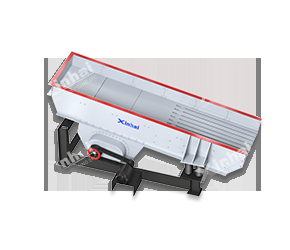

Gravity Separation, Flotation and Magnetic Separation Processes for Barite
2026-07-11 Xinhai (11)

2026-07-11 Xinhai (11)
If you have any questions, please contact us through the following ways, we will give you more and better assistance!

Barite separation relies on three key differences—density, surface physicochemical properties and magnetic properties—to form three core processes: gravity separation, flotation and magnetic separation. A single process is suited to a single mineral phase, whilst complex ores are typically processed using a combined multi-process separation scheme.
Gravity separation is the fundamental process for barite, achieving separation through the density difference between barite and gangue minerals. The entire process requires no chemical reagents and involves low environmental costs. Coarse-grained material is suitable for heavy-medium separation and jigging. Heavy-medium separation equipment has a simple structure and is cost-effective for processing coarse-grained material; however, it is less effective for separating fine particles and suffers from medium loss issues; Jigging equipment is suitable for materials across a wide range of particle sizes; it is simple to operate and can be adapted to production lines with varying capacities. Its drawbacks include high water consumption and a relatively low recovery rate for very fine particles. For fine-grained materials, shaking tables are used; these offer high separation precision and can produce high-purity barite concentrate. However, their disadvantages include limited processing capacity per unit, a large footprint and relatively high energy consumption. Prior to gravity separation, hydrocyclones are typically employed for desliming to eliminate slime interference and improve separation performance.
Floating is used for barite feedstock with fine mineral distribution and complex associated sulphide impurities; it relies on flotation reagents to adjust the surface wettability of the minerals, enabling barite to adhere to bubbles and float to the surface for separation. By optimising the ratio of collectors to inhibitors, barite can be effectively separated from sulphide minerals and silicate gangue, significantly improving the recovery rate of fine-grained barite; however, the drawbacks include high reagent consumption and environmental disposal pressures arising from reagent residues. The flotation process is continuously being improved towards lower reagent consumption and automated control, whilst simultaneously enhancing the recovery of fine-grained minerals.
Magnetic separation, as an auxiliary impurity removal process, is used solely to remove magnetic impurities from the ore. It is suitable for barite feedstock containing magnetite-type associated minerals; both permanent magnet and electromagnetic separators can achieve efficient impurity removal with a simple operating procedure. However, it is ineffective at separating non-magnetic gangue and sulphide impurities and cannot serve as the primary separation process on its own.
For ores with complex compositions and uneven grain size distribution, a combined gravity-flotation and gravity-magnetic separation process is employed. This integrates the advantages of various separation technologies to recover barite of different particle sizes in stages, thereby balancing concentrate grade and resource recovery rate.


 Consult
 Message
 Email
Email