

 +8618733132385
 +8618733132385


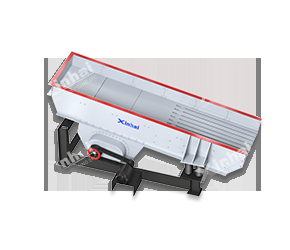

Overview of Tin Ore Beneficiation Processes
2026-07-16 Xinhai (12)

2026-07-16 Xinhai (12)
If you have any questions, please contact us through the following ways, we will give you more and better assistance!

The key mineral to be recovered in tin ore beneficiation is cassiterite, which is often associated with sulphide ores, iron minerals and gangue minerals such as quartz and calcite. The fine grain size of the cassiterite and the complex composition of the ore present significant challenges to the beneficiation process. Current tin ore beneficiation relies on the differences in density, magnetic properties and floatability of various minerals. With gravity separation, flotation and magnetic separation as the core processes, combined with electrostatic separation for purification and integrated multi-process flowsheets, the efficient separation and concentration of cassiterite is achieved.
Gravity separation is the traditional and fundamental process for tin ore beneficiation. It relies on the density difference between cassiterite and gangue to achieve separation and is suitable for coarse, medium and fine-grained, individually liberated cassiterite. It primarily utilises equipment such as shaking tables and jigs to achieve the enrichment of high-density cassiterite through water scouring and vibration-induced stratification. Whilst offering the advantages of a simple process and low energy consumption, it is less effective at recovering ultrafine-grained cassiterite and cannot, on its own, complete the separation of complex ores.
Magnetic separation is primarily used for the pre-treatment of iron-tin co-occurring ores. It exploits the difference in magnetic properties between cassiterite (which is weakly magnetic) and iron minerals (which are strongly magnetic). Through the use of weak and strong magnetic separation equipment, interfering minerals such as magnetite and hematite are removed in stages, thereby eliminating the negative impact of iron minerals on cassiterite separation. It is often incorporated as a supporting process within the overall separation workflow. Electro-separation, on the other hand, is predominantly used for late-stage deep purification. It relies on differences in the electrical conductivity of minerals to remove gangue impurities, thereby effectively enhancing the grade of tin concentrate.


 Consult
 Message
 Email
Email