

 +8618733132385
 +8618733132385



Properties of Potassium Feldspar and Beneficiation Processes
2026-05-10 Xinhai (277)

2026-05-10 Xinhai (277)
If you have any questions, please contact us through the following ways, we will give you more and better assistance!

Potassium feldspar is a typical framework silicate mineral, with a chemical composition of silicon dioxide, aluminium oxide and potassium oxide. It has a monoclinic crystal structure and typically appears in shades of red, yellow or white. It possesses stable physicochemical properties and moderate density and hardness. As the most widely distributed and abundant potassium-bearing mineral in nature, it is primarily found in acidic igneous rocks and is particularly common in granitic bodies. In addition to the typical orthoclase, potassium feldspar includes a variety of isomorphous polymorphs with the same structure, making it an indispensable industrial raw material in fields such as ceramics, glass, building materials and chemicals.
As natural potassium feldspar ore is often associated with iron-bearing minerals, mica, clay and other silicate impurities, it is difficult to meet industrial requirements when used directly and must therefore be purified through mineral processing. Currently, the most widely used industrial methods for potassium feldspar separation include washing, magnetic separation, flotation, acid leaching and combined processes.
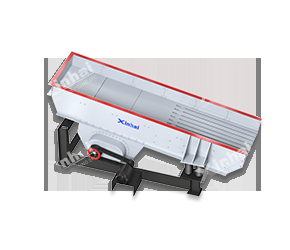
Wash beneficiation is a simple process for treating weathered granite-type potassium feldspar and feldspar sand deposits. Its core function is to remove light, fine impurities such as clay, silt and mica, effectively reducing the iron oxide content and enhancing the grade of the effective potassium and sodium components. This process is typically carried out using vibrating screens or washing troughs, utilising the action of water flow to separate light, fine impurities from coarse feldspar grains; it is characterised by its simplicity and low cost.
Magnetic separation is primarily used to remove magnetic impurities from potassium feldspar, including iron minerals, biotite, hornblende and tourmaline. As these impurities generally possess weak magnetic properties, conventional magnetic separation struggles to achieve effective separation. Industrial production therefore typically employs high-intensity magnetic separation equipment, which utilises strong magnetic fields to achieve efficient separation of magnetic minerals from non-magnetic potassium feldspar.
Flotation is a key process for the thorough removal of impurities from potassium feldspar, enabling the targeted removal of various types of iron-bearing impurities. In an acidic environment, the use of amine collectors allows for the preferential flotation of mica; xanthate collectors can be used to remove sulphide minerals such as pyrite; and sulphate collectors can be selected to separate iron-bearing silicate minerals. Through multi-stage flotation, the synergistic removal of multiple impurities can be achieved.
Acid leaching is suitable for the production of high-purity potassium feldspar, which requires extremely low iron content. This method utilises sulphuric acid as the primary leaching agent; the acid concentration is adjusted according to the iron content of the ore. Through chemical reactions, impurities such as iron oxide and ferric oxide in the ore are fully dissolved, and solid-liquid separation is then carried out to obtain low-iron, high-purity feldspar powder.
In actual production, a single process often fails to meet ideal specifications; therefore, combined processes such as ore washing, magnetic separation and flotation are frequently employed to achieve efficient purification of potassium feldspar and meet the demands of high-end industrial applications.


 Consult
 Message
 Email
Email