

 +8618733132385
 +8618733132385



Equipment Configuration and Investment Costs for Gold Processing Plants
2026-05-09 Xinhai (253)

2026-05-09 Xinhai (253)
If you have any questions, please contact us through the following ways, we will give you more and better assistance!

Gold processing plants form the core production line for the efficient extraction of gold from ore. With the continuous rise in demand for gold, their construction and configuration have attracted significant attention. A complete gold processing system primarily comprises four major stages: crushing and screening, grinding and classification, separation and extraction, and dewatering and drying. Each stage is equipped with specialised machinery, whilst the cost of establishing a plant is influenced by a variety of factors.
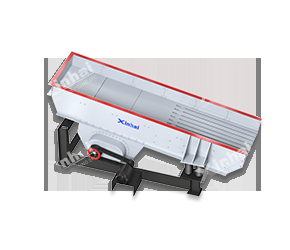
The core equipment of a gold processing plant is configured according to the process flow. The crushing and screening stage primarily utilises jaw crushers, cone crushers, impact crushers and vibrating screens to progressively crush the raw ore in preparation for grinding. The grinding and classification stage employs equipment such as ball mills, spiral classifiers and hydrocyclones to ensure thorough liberation of gold-bearing minerals, thereby enhancing the efficiency of subsequent separation processes. Separation and extraction constitute the critical stage. Depending on the properties of the ore, processes such as gravity separation, flotation or cyanidation may be selected, supported by equipment including shaking tables, centrifugal separators, flotation cells, leaching tanks and desorption-electrolysis systems. During the dewatering stage, equipment such as thickeners, filter presses and dryers is used to dewater and dry the slurry, producing qualified gold concentrate.
Investment costs for plant construction vary significantly, primarily influenced by four factors. Firstly, the nature of the ore: easily processable ores require simpler processes and lower equipment investment, whilst difficult-to-process ores necessitate a complete process flow with a wider variety of equipment and higher investment. Secondly, production line configuration: a rational and compact layout can optimise equipment integration and reduce overall investment. Thirdly, equipment quality: high-performance, large-scale equipment offers longer service life and higher capacity, but comes at a higher price. Fourthly, the equipment manufacturer: reputable large-scale manufacturers offer comprehensive equipment ranges and better value for money; smaller manufacturers may have to piece together production lines, resulting in higher overall costs. Additionally, regional factors and market conditions may also influence the final investment.
When establishing a gold processing plant, one should take into account the characteristics of the ore, conduct beneficiation trials first to determine the optimal process and equipment configuration, and select a reputable manufacturer. This approach ensures production efficiency whilst effectively controlling investment costs.


 Consult
 Message
 Email
Email