

 +8618733132385
 +8618733132385



Intelligent Optoelectronic Mineral Processing Technology for Phosphate Ore
2026-05-22 Xinhai (171)

2026-05-22 Xinhai (171)
If you have any questions, please contact us through the following ways, we will give you more and better assistance!

Phosphate ore is a core strategic mineral essential for agricultural production, the development of the chemical industry, and national defence and military construction, and it holds immense strategic value. Although China possesses abundant reserves of phosphate ore, its overall resource endowment is relatively poor, characterised by complex ore distribution and significant variations in grade. For a long time, issues such as the extraction of high-grade ore whilst discarding low-grade ore, the wasteful stockpiling of low-grade ore, and significant pollution from mineral processing have resulted in the idling and wastage of vast quantities of phosphate ore resources. With the iterative upgrading of green mining and high-efficiency beneficiation technologies, intelligent optoelectronic beneficiation technology—leveraging its core advantages of energy efficiency, environmental friendliness, high efficiency and low cost—is gradually replacing traditional gravity and flotation processes. It has become a key technology for upgrading phosphate ore quality, discarding waste, and revitalising low-grade resources.
Compared to traditional beneficiation processes, optoelectronic beneficiation requires no chemical additives, consumes less energy and produces no secondary pollution, perfectly aligning with the demands of green and low-carbon development in the mining sector. Today, this technology has overcome the limitations of traditional mechanical sorting by integrating cutting-edge technologies such as high-speed scanning, fluorescent probes, laser-induced spectroscopy and AI-powered intelligent recognition. It has achieved high-precision, automated intelligent sorting, significantly enhancing the accuracy of phosphate ore sorting and production efficiency, whilst delivering notable improvements in both economic and environmental benefits.
The core objective of optoelectronic beneficiation for phosphate ore is to precisely remove gangue impurities and improve the grade of phosphate concentrate. It focuses on addressing industry pain points such as the difficulty in utilising medium- and low-grade gelatinous phosphate ore and the inability to reuse stockpiled tailings, thereby maximising the utilisation of idle phosphate ore resources and enhancing the comprehensive utilisation rate of mineral resources. The entire process is standardised and easy to implement, comprising four core stages.
Firstly, there is the pre-treatment stage of crushing and screening. After being crushed by a crusher, the raw ore is fed into a vibrating screen for classification and screening. This removes substandard ore in the form of ultra-fine powder and oversized lumps, selecting ore in the standard particle size range of 10–60 mm suitable for photoelectric sorting. This ensures uniform feed particle size, laying the foundation for precise sorting, whilst substandard material is returned to the crushing process for reprocessing.
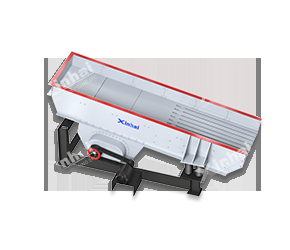
Next is uniform feeding and conveying. The graded, compliant ore is evenly distributed via a vibrating feeder and conveyed at a constant speed to the photoelectric sorting equipment. This ensures that each individual ore particle lies flat and independent, without overlapping or obstruction, thereby preventing recognition errors caused by material accumulation and guaranteeing that every ore particle is accurately scanned and inspected.
Next is intelligent identification and analysis. The equipment is equipped with a dual identification system combining X-ray transmission and high-definition optical imaging, integrated with AI algorithms. This rapidly captures characteristics such as the ore’s density, colour and texture, accurately distinguishing high-grade phosphate ore from gangue waste such as quartz and mudstone. Material classification is completed swiftly, with high identification speed and accuracy, making it suitable for the sorting of complex, co-occurring phosphate ores.
Finally, there is precise separation and removal. Once the system has completed its intelligent assessment, a high-speed jet-jet removal device rapidly and accurately separates waste rock from qualified phosphate ore, stacking them separately to ultimately yield high-grade phosphate ore material. The small amount of tailings generated during separation can be subjected to secondary recovery through grinding and flotation processes, maximising resource utilisation.
The entire photoelectric mineral processing system is highly automated, requiring no manual intervention throughout the process, thereby completely avoiding the drawbacks of traditional mineral processing methods, such as chemical contamination, high energy consumption and low recovery rates. With the continuous advancement of artificial intelligence and sensor technology, the recognition accuracy and sorting efficiency of photoelectric mineral processing equipment will continue to improve. In the future, it will be widely applied in scenarios such as the upgrading of low-grade phosphate ore, the reuse of old tailings, and pre-sorting of waste in mines, becoming a core process driving the green, efficient and intelligent development of the phosphate mining industry.


 Consult
 Message
 Email
Email