
 xrguo@xinhaimining.net
 +8618733132385
 +8618733132385



Placer Gold Processing Flow – Alluvial Gold Beneficiation Guide
2026-09-18 Xinhai (28)

2026-09-18 Xinhai (28)
If you have any questions, please contact us through the following ways, we will give you more and better assistance!

Placer gold, also known as alluvial gold, is formed by long-term geological weathering, river scouring and sediment deposition. Compared with hard rock gold, placer gold features high monomer dissociation degree, simple mineral composition and huge density difference between gold and sand gangue. For this reason, modern placer gold beneficiation mainly adopts physical gravity separation technology, which is eco-friendly, low-cost, high-efficiency and suitable for large-scale alluvial gold mining projects worldwide.
The complete placer gold processing flow includes raw ore washing, desliming, screening, gravity separation and fine concentration. Washing and desliming is the most critical pretreatment step. Natural placer raw materials contain a large amount of sticky clay, fine silt and mixed gravel. These slime substances easily wrap micro fine gold particles and block separation equipment, resulting in low gold recovery. Professional washing and scrubbing equipment thoroughly removes surface mud and impurities, fully exposing free gold particles.
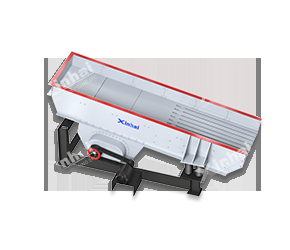
After purification treatment, materials enter the grading screening process. Through vibrating screen classification, oversized waste rock and unqualified particles are removed to ensure uniform feeding particle size, which provides stable conditions for precise gravity separation. Qualified ore sand is continuously sent to the core beneficiation unit.
Gravity separation is the key technology of placer gold extraction. Centrifugal gold concentrators, jig separators and gold sluices are widely used in industrial production. Relying on the significant specific gravity difference between gold and gangue minerals, free gold particles are rapidly settled and enriched under water flow and centrifugal force, while light sand and impurities are discharged as tailings. This physical separation requires no chemical reagents, realizing green and pollution-free production.
To further improve gold purity, the rough gold concentrate obtained from primary separation will undergo secondary fine cleaning and sorting. After impurity removal and concentration treatment, high-purity gold concentrate is formed. With simple process, low operating cost and high recovery rate, the standard placer gold beneficiation flow has become the mainstream solution for alluvial gold mines in Africa, Southeast Asia and other major placer gold producing areas.


 Consult
 Message
 Email
Email