
 xrguo@xinhaimining.net
 +8618733132385
 +8618733132385



A Step-by-Step Breakdown of the Complete Tin Ore Beneficiation Process
2026-08-14 Xinhai (61)

2026-08-14 Xinhai (61)
If you have any questions, please contact us through the following ways, we will give you more and better assistance!

Tin ore beneficiation is a systematic engineering process involving the coordination of multiple stages. The entire process, from the preliminary raw material pre-treatment at the front end to the disposal of concentrate and tailings at the back end, is a seamlessly interconnected sequence, with each stage directly affecting the tin metal recovery rate and the quality of the concentrate. The key points of the entire process are broken down step-by-step below.
Many tin ores are heavily coated with clay and suffer from significant siltation issues; therefore, ore washing and desliming processes must be incorporated prior to crushing.
Ore washing flushes away the cohesive clay and impurities adhering to the ore surface, preventing soil from clogging crushers and screening equipment. Removing fine silt in advance also prevents it from interfering with subsequent gravity and flotation separation processes, thereby stabilising overall separation performance.
Once the raw material has undergone desliming, it proceeds to the crushing stage, where a two-stage or three-stage closed-circuit crushing process is commonly adopted across the industry.
Through multi-stage crushing combined with recirculating screening, large chunks of raw ore are processed to a size range of 0–12 mm, providing uniformly sized feed for the subsequent grinding process and reducing the load on the grinding equipment.
Cassiterite is inherently brittle, making it highly susceptible to over-grinding and sludging during the crushing and grinding stages; this is a key focus of mineral processing control.
Throughout production, the core principle of ‘stage-by-stage grinding and stage-by-stage separation’ is adhered to, minimising losses due to over-grinding of the tin ore. Conventional grinding fineness is controlled to ensure that particles of -200 mesh account for 60%–80% of the total; actual targets are flexibly adjusted according to the coarseness of cassiterite distribution in the ore. Following grinding, classification equipment is employed simultaneously to separate qualified material from coarse-grained material.
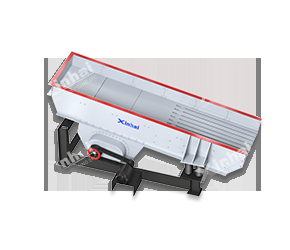
Gravity separation is the core process for recovering cassiterite, relying on differences in mineral density to achieve separation; it is carried out using two stages of equipment in combination.
Jigging machines are suitable for the roughing of coarse cassiterite; when the specific gravity difference exceeds 1.25 and the minerals are sufficiently liberated, particles as small as 0.04 mm can be recovered. Shaking tables focus on the concentrating of fine-grained cassiterite, with a feed size range of 0.019–3 mm, to purify the rough concentrate and enhance the base grade of the tin concentrate.
Gravity separation has limited effectiveness in recovering micro- and fine-grained cassiterite; flotation is specifically employed to address the loss of fine-grained metal.
In production, oleic acid, toluene arsenic acid and salicylohydroxamic acid are selected as collectors, combined with acid and alkali adjusters to regulate the pulp pH; the addition of water glass and sodium hexametaphosphate suppresses gangue minerals, achieving efficient separation of cassiterite from associated impurities and improving the overall recovery rate of fine-grained tin metal.
Some tin ores contain magnetic impurities such as magnetite, hematite, pyrite and tungsten minerals.
The magnetic separation process can selectively separate magnetically associated minerals, removing interfering impurities, further purifying the crude tin concentrate and reducing the content of harmful impurities in the concentrate.
As the yield of tin concentrate is relatively low, basic dewatering is conventionally achieved through sedimentation and thickening; high-grade tin concentrate intended for export requires supplementary drying equipment for deep dewatering to meet the moisture content standards for finished products.
Mining tailings are disposed of via two methods: wet discharge and dry discharge. Enterprises select the appropriate tailings treatment scheme based on site conditions and environmental protection requirements.


 Consult
 Message
 Email
Email